
A forge floor that pays in groups
Emberhex is laid out as a small honeycomb: nineteen hexagonal tiles in rows of three, four, five, four and three. Every tile shows one symbol. There are no reels and no lines. What matters is which tiles touch. A tile has up to six neighbours, and five or more matching symbols joined edge to edge form a group that pays.
Anvils, hammers and tongs are the forge pieces and pay the most. Four cut gemstones (ruby, sapphire, emerald and topaz) turn up far more often and pay less. The ember core is the wild, standing in for whichever symbol it touches, and can belong to two groups at once if it sits between them.
Why the ember core matters
Each ember core inside a paying group doubles that group. Two cores make it four times, three make it eight, and eight is the ceiling. Cores are rare, about one tile in forty, so most rounds have none and the board is settled by the gems. That is the whole game: one drop, one count, and the result on the line under the board.
A group of five sapphires returns half the stake. It is a return smaller than what you put in, and the verdict line says so plainly: the round is shown as down, never dressed up. Rounds that return more than the stake are the minority, and over a long run every game in the pack hands back less than is staked.
How a round plays
- Choose a stake from 5 to 100 glints with the − and + buttons.
- Press Drop. Nineteen tiles fill at once.
- Groups of five or more touching symbols light up; ember cores show their × 2.
- The line under the board says what came back and whether the round is up or down.
Pay table
| Symbol | 5 | 6 | 7 | 8 | 9 | 11+ |
|---|---|---|---|---|---|---|
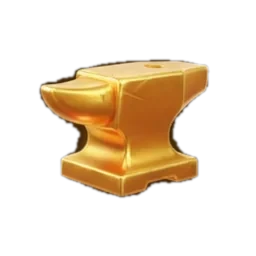 Anvil | 2.5 | 5 | 10 | 20 | 40 | 100 |
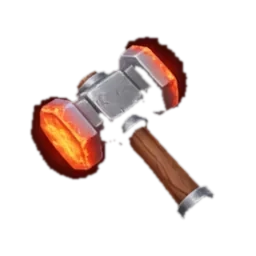 Hammer | 2 | 4 | 8 | 15 | 28 | 70 |
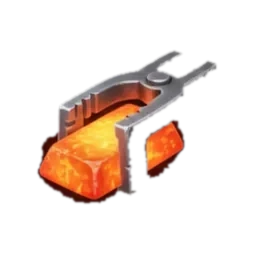 Tongs | 1.25 | 2.5 | 5 | 10 | 20 | 45 |
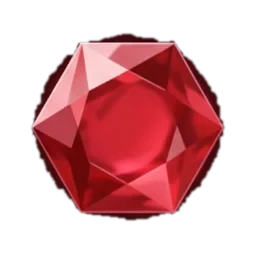 Ruby | 0.6 | 1.25 | 2.5 | 5 | 9 | 20 |
 Sapphire | 0.5 | 1 | 2 | 4 | 8 | 15 |
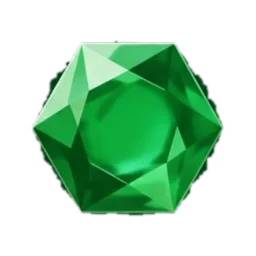 Emerald | 0.4 | 0.75 | 1.5 | 3 | 6 | 12 |
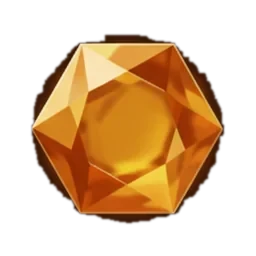 Topaz | 0.3 | 0.6 | 1.25 | 2.5 | 5 | 10 |
Glints have no cash value. Returns are shown so you can see how the game works, not as anything you can take away.